
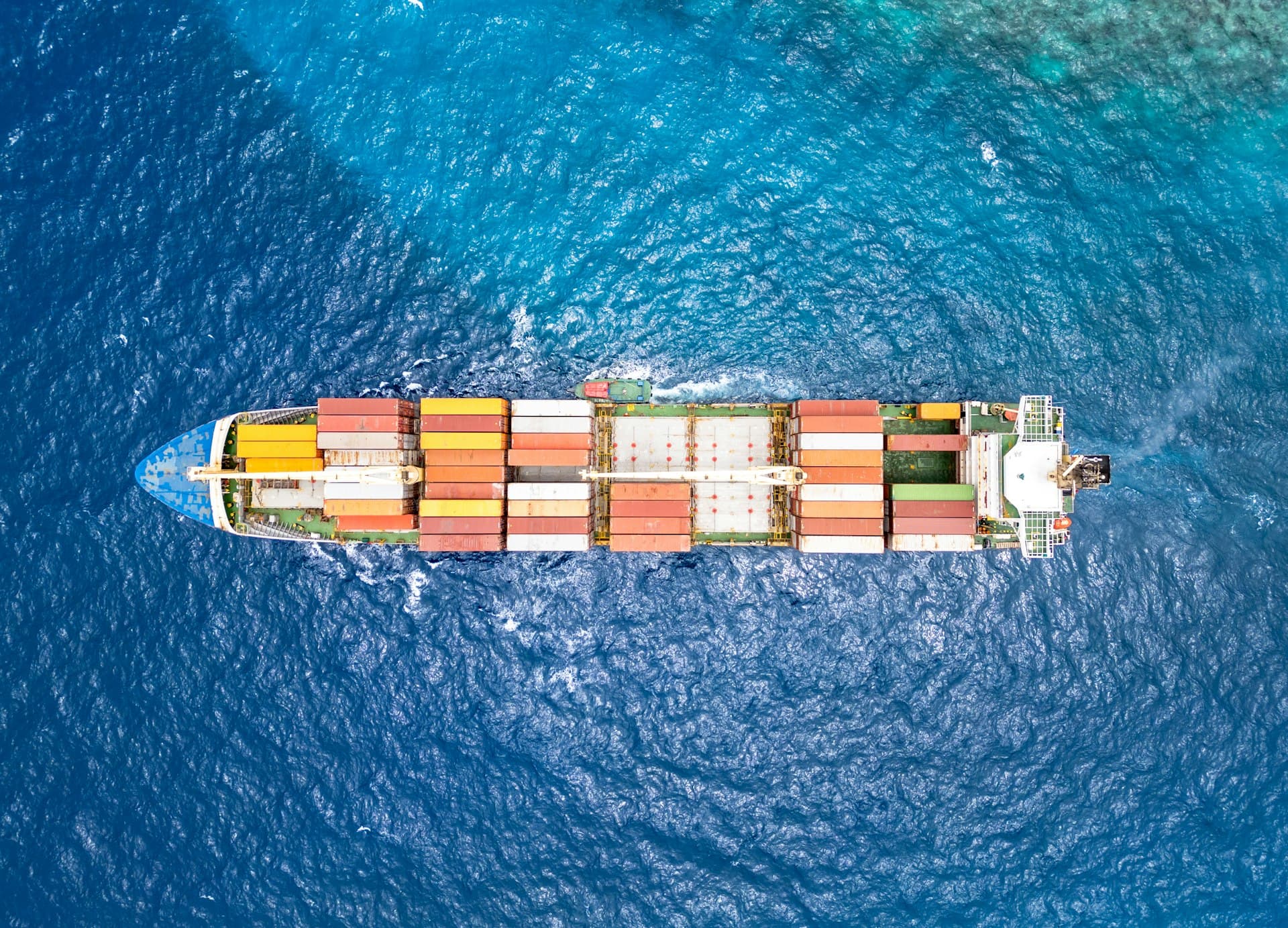
Photo by Bent Van Aeken on Unsplash
Insights
What is an NVOCC? A Clear Explanation for Importers and Exporters
When you're booking ocean freight, two acronyms come up constantly: VOCC and NVOCC. Most shippers nod along during the first call, then quietly Google them later. Here's the clear version.
The short answer
An NVOCC is a Non-Vessel-Operating Common Carrier. We don't own the ship — we contract space on it from carriers like Maersk, MSC, Hapag-Lloyd, or ONE (the VOCCs, or "Vessel-Operating Common Carriers"). But once cargo is in our hands, we operate like a carrier ourselves: we issue our own Bills of Lading, we set our own freight rates, and we take legal responsibility for the cargo's movement.
If a VOCC is like an airline that owns the plane, an NVOCC is like a tour operator that buys blocks of seats and sells them to travelers with everything bundled — booking, baggage, support — under their own brand.
Why NVOCCs exist
Ocean carriers are massive operations. They're great at moving vessels. They're less great at:
- Handling individual customer relationships at smaller volumes
- Bundling inland trucking, customs documentation, and warehousing into a single service
- Talking shippers through their first international move
- Being reachable when something goes sideways at 11 PM
NVOCCs fill that gap. We buy capacity in bulk from the carriers, then resell it as part of a coordinated end-to-end service. A shipper books with us, we book with the carrier. The shipper gets one point of contact for everything that happens between origin and destination.
NVOCC vs. Freight Forwarder — what's the difference?
In practice, the line is blurry — most NVOCCs are also freight forwarders, and most freight forwarders work with NVOCCs. The legal distinction is real, though:
- A Freight Forwarder acts as the shipper's agent. They arrange transportation but don't take legal responsibility for the cargo.
- An NVOCC acts as a carrier. They issue their own Bill of Lading, set their own rates, and are legally on the hook for the cargo's movement.
Conveyco is both — licensed as an NVOCC with the Federal Maritime Commission and providing freight forwarding services across ocean, inland trucking, rail, warehousing, and project logistics. That dual role lets us issue our own NVOCC Bills of Lading on shipments where it makes sense, while also handling all the forwarding work — customs documentation, drayage coordination, container tracking.
When you need an NVOCC
You'll often benefit from working through an NVOCC rather than booking direct with the carrier when:
- You're shipping less than a full container (LCL — Less than Container Load). Direct carrier relationships almost always require FCL volumes.
- You ship across multiple routes or carriers. An NVOCC consolidates your freight under one contract and one rate sheet, instead of you maintaining separate accounts with three different ocean lines.
- You want bundled services. Door-to-door coordination — pickup, drayage, ocean, customs paperwork, delivery — handled by one operator.
- You want personal service. Direct carrier relationships at small-to-mid volume tend to flow through call centers. NVOCC relationships flow through people who actually remember your shipments.
- You're new to international freight. NVOCCs spend significant time walking first-time exporters and importers through the process — what an SLI is, what Incoterms to pick, what documents customs needs.
How NVOCCs are regulated
In the U.S., NVOCCs are licensed by the Federal Maritime Commission (FMC). To operate, an NVOCC must:
- Hold an active FMC license
- Maintain a published Tariff that anyone can inspect, listing all standard rates, surcharges, and conditions of service
- Maintain financial responsibility (bond or insurance) covering cargo claims
- Comply with federal anti-rebate and anti-discrimination regulations
The published Tariff is the public-facing rate document. You can find Conveyco's NVOCC Tariff and historical archive in our Resources section. Any NVOCC you work with should make their tariff trivially accessible — if they don't, that's a flag.
What to look for in an NVOCC
If you're evaluating freight forwarders or NVOCCs, ask:
- Are you FMC-licensed? (Required.)
- Where's your tariff published?
- How long have you held your license?
- What carriers do you work with? (Diverse relationships = more routing flexibility for you.)
- Who's my actual point of contact? A person, or a queue?
- What's the response time when something goes wrong overseas?
- Can you handle the full door-to-door coordination, or just the ocean leg?
- What's your cargo insurance situation? Do you offer it directly, or refer to underwriters?
The last point matters more than people realize. Cargo can shift, ports can flood, ships can lose containers overboard. Knowing who's actually on the hook for what — and how — separates good operators from cheap operators.
The Conveyco take
We're a U.S.-based NVOCC and freight forwarder operating out of Burnsville, Minnesota. We've built the company around one principle: freight is a people business. The technology we use — this portal, our SLI form, our document tracking — exists to make routine things invisible, so we can spend our energy on the calls that actually matter. When your container's at the port and customs is asking for a document at 4 PM Pacific, you want a person, not a chat queue.
If you're shipping internationally and want to talk through what you're moving, request a quote or reach us at Conveyco-Concierge@theconveyco.com.